 گروه حمایت و همدلی زوجین نابارور

The IVF Process in Iran: A Step-by-Step Guide for Patients
 مولف: Ata Safarnezhad
Listen to the audio summary of the article
Embarking on an In Vitro Fertilization (IVF) journey is a significant undertaking, blending profound hope with complex medical procedures and logistical planning. When that journey takes you abroad, the need for a clear, transparent roadmap becomes paramount. This guide provides a detailed, chronological walkthrough of the IVF process step by step in Iran, designed specifically for international patients. It demystifies each phase, from the initial online consultation to the final pregnancy test, ensuring you feel informed, prepared, and confident as you take this pivotal step toward building your family.
Iran has emerged as a global center for reproductive medicine, offering a unique combination of world-class medical expertise, advanced technology, and remarkable affordability. Understanding the structured and patient-centric approach of an Iran fertility clinic procedure can transform feelings of uncertainty into a sense of empowerment. This comprehensive overview will serve as your trusted companion, detailing exactly what to expect at every stage of your treatment.
The Preparatory Phase: Before You Travel to Iran
The foundation for a successful IVF cycle is laid long before you board your flight. This crucial preparatory phase involves remote communication, medical evaluation, and careful logistical planning, all coordinated seamlessly between you and your chosen clinic in Iran. The goal is to ensure that when you arrive, your treatment can begin promptly and efficiently.
This initial stage is all about collaboration and alignment. Your medical team in Iran works closely with you to understand your unique fertility history and tailor a preliminary plan, while you organize the necessary travel arrangements to make your journey as smooth as possible.
Initial Online Consultation and Medical Review
Your IVF journey in Iran begins with an initial point of contact, typically through a clinic’s international patient department or a specialized medical tourism facilitator. This first step involves a comprehensive review of your medical history. You will be asked to provide all relevant documents, including previous fertility workups, blood test results (like AMH, FSH), ultrasound scans, and a recent semen analysis for the male partner.
Once your records are reviewed, a video consultation is scheduled with a senior fertility specialist. This is a vital opportunity to discuss your case in detail, ask questions, and understand the doctor’s proposed treatment strategy. This remote meeting establishes a direct line of communication and trust, ensuring your personalized treatment plan is well-defined before you commit to travel.
Synchronizing Your Cycle and Preliminary Medications
To ensure precise timing for your treatment, the clinic will often guide you on how to synchronize your menstrual cycle with their schedule. This is most commonly achieved by prescribing a course of oral contraceptive pills (birth control pills) for you to start in the cycle preceding your travel. This simple step gives the clinical team control over your timing, making the entire IVF timeline Iran more predictable.
In addition to cycle regulation, your doctor may recommend starting specific prenatal vitamins or other supplements to optimize your reproductive health. Any necessary preliminary medications are prescribed for you to obtain in your home country, with clear instructions on when and how to take them.
Planning Your Travel and Logistics
With a medical plan in place, the focus shifts to logistics. This includes applying for a medical visa for Iran, booking your flights, and arranging accommodation for your stay, which typically lasts around three weeks. Reputable Iranian clinics and their affiliated facilitators excel in this area, often providing comprehensive packages that simplify the entire process.
These services frequently include assistance with the visa application, airport pickup upon arrival, pre-booked accommodation in a comfortable hotel or apartment near the clinic, and the assignment of a personal coordinator or translator. This dedicated support system is designed to eliminate logistical stress, allowing you to focus entirely on your treatment and well-being.
Stage One: Ovarian Stimulation
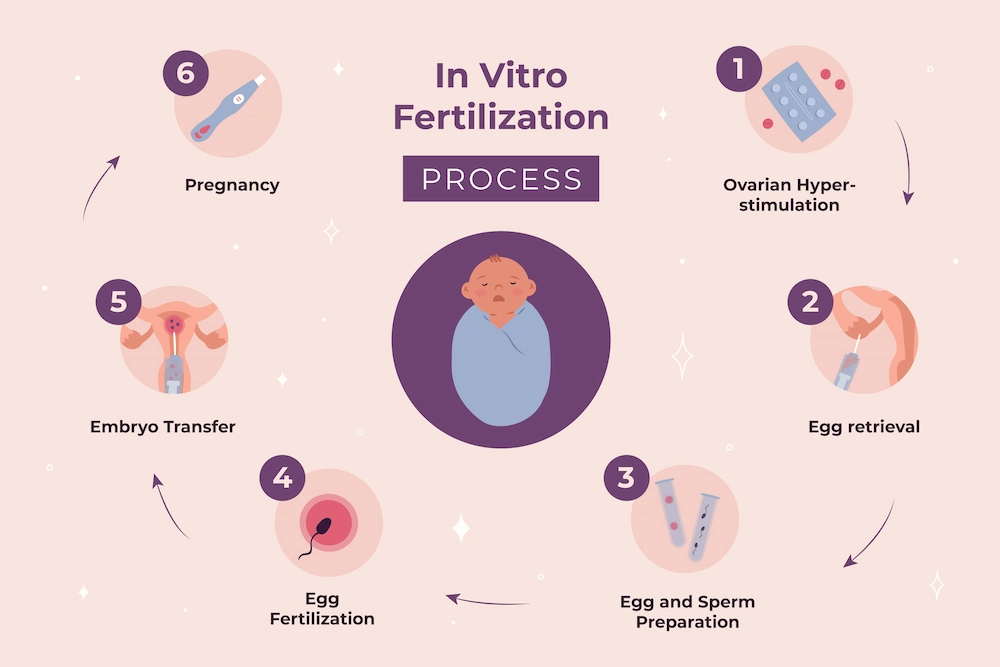
This is the first active phase of your IVF treatment upon arrival in Iran. The primary objective of ovarian stimulation is to encourage your ovaries to produce multiple mature eggs, rather than the single egg typical of a natural cycle. This stage requires daily medication and regular monitoring to ensure the safest and most effective outcome.
Your First In-Person Visit and Baseline Assessment
Your first day of treatment, usually coinciding with day 2 or 3 of your menstrual period, begins with your first in-person visit to the clinic. Here you will meet your medical team, including your doctor and personal coordinator. A baseline assessment is performed, which includes a transvaginal ultrasound to examine your ovaries and uterine lining, and blood tests to check your hormone levels.
This initial assessment confirms that your body is ready to begin stimulation and allows the doctor to finalize the specific dosages for your medication protocol. It’s a crucial starting point that ensures the treatment is perfectly tailored to your body’s response.
The Daily Routine of Stimulation Injections
The core of the ovarian stimulation phase involves daily injections of fertility hormones, primarily Follicle-Stimulating Hormone (FSH) and Luteinizing Hormone (LH). These medications, known as gonadotropins, are self-administered via a small needle into the subcutaneous tissue of your abdomen.
While the idea of self-injection can seem daunting, the clinic’s nursing staff provides a thorough demonstration and clear instructions to make you feel comfortable and confident with the process. This daily routine typically continues for about 8 to 12 days, depending on how your ovaries respond.
Regular Monitoring for Follicle Growth
Throughout the stimulation phase, you will visit the clinic every two to three days for close monitoring. This is one of the most critical stages of IVF treatment. Each monitoring appointment involves a transvaginal ultrasound to measure the size and number of developing follicles within your ovaries and a blood test to track your estradiol (estrogen) levels.
This regular feedback allows your doctor to track your progress meticulously and make any necessary adjustments to your medication dosage. The goal is to achieve optimal follicle growth while minimizing the risk of complications like Ovarian Hyperstimulation Syndrome (OHSS).
The Trigger Shot: Finalizing Egg Maturation
Once the ultrasound scans show that a sufficient number of follicles have reached the ideal size (typically around 18-20mm), it is time to prepare for egg retrieval. This is initiated with a final injection known as the “trigger shot.” This injection, usually containing human chorionic gonadotropin (hCG), triggers the final maturation process of the eggs within the follicles.
The timing of this shot is absolutely critical. The egg retrieval procedure must be scheduled for a precise window, almost exactly 36 hours after the trigger shot is administered, to collect the eggs at their peak maturity.
Stage Two: Egg and Sperm Retrieval
This stage marks a significant milestone in your IVF journey: the collection of the gametes (eggs and sperm) that will be used to create your embryos. Both procedures are performed on the same day in a highly coordinated effort between the clinical team and the embryology laboratory.
The Egg Retrieval Procedure
The egg retrieval is a minimally invasive surgical procedure performed at the clinic or an affiliated hospital. You will be placed under light sedation or general anesthesia to ensure you are completely comfortable and feel no pain. The procedure itself is relatively short, lasting about 20 to 30 minutes.
Using a transvaginal ultrasound for guidance, the doctor passes a thin, hollow needle through the vaginal wall and into each mature follicle in the ovaries. Gentle suction is applied to aspirate the follicular fluid, which contains the egg, from each follicle. The collected fluid is immediately passed to the embryology lab, located adjacent to the procedure room.
Sperm Collection and Preparation
While the egg retrieval is taking place, the male partner will provide a fresh semen sample in a private collection room. If you are using frozen sperm from your partner or a donor, it will be carefully thawed at this time.
The collected sample is then taken to the laboratory for a process called “sperm washing and preparation.” This technique separates the healthiest, most motile sperm from the seminal fluid. This concentrated sample of high-quality sperm is then ready for the fertilization process.
Stage Three: The Laboratory Phase - Fertilization
With both eggs and sperm successfully collected, the focus of your IVF journey from start to finish shifts to the highly specialized environment of the embryology laboratory. Over the next several days, skilled embryologists will facilitate fertilization and carefully nurture the resulting embryos as they begin to grow and develop.
Fertilization: Creating the Embryos
The embryologist first examines the collected follicular fluid under a microscope to identify and isolate the mature eggs. Fertilization is then attempted using one of two methods:
- Conventional Insemination: The prepared sperm and mature eggs are placed together in a petri dish and incubated overnight. In this method, fertilization occurs naturally as the sperm penetrates the egg on its own.
- Intracytoplasmic Sperm Injection (ICSI): This more advanced technique is now standard practice in many leading Iranian clinics due to its high success rate. An embryologist uses a powerful microscope and a micro-manipulation tool to select a single, healthy sperm and inject it directly into the cytoplasm of each mature egg. ICSI is particularly effective in cases of male factor infertility.
Embryo Culture and Development Monitoring
The morning after fertilization, the embryologist will check the eggs to see how many have successfully fertilized, now referred to as embryos. These embryos are placed in a controlled incubator that mimics the conditions of the human body, providing the optimal environment for them to grow. This phase is known as fertilization and embryo culture.
Over the next three to five days, the embryologists will closely monitor the embryos’ development. They assess them daily, grading their quality based on factors like the number of cells, the rate of cell division, and overall structure. This meticulous grading process helps identify the healthiest embryos with the highest potential for implantation.
The Decision for a Day 3 or Day 5 (Blastocyst) Transfer
The embryos can be transferred back into the uterus at either the “cleavage stage” (Day 3 of development) or the “blastocyst stage” (Day 5 of development). While a Day 3 transfer is effective, allowing embryos to grow to the blastocyst stage is often preferred.
A blastocyst is a more developed embryo that has already differentiated into two cell types. Growing embryos to this stage acts as a natural selection process, as only the most robust embryos will reach this point. This allows the embryologist and doctor to select the single best embryo for transfer, which can lead to higher implantation rates and reduce the risk of multiple pregnancies.
Stage Four: Embryo Transfer and the Two-Week Wait
This stage represents the culmination of the medical procedures in Iran. The embryo transfer is the delicate and hopeful step of placing the selected embryo(s) into the uterus, followed by a period of waiting for implantation to occur.
The Embryo Transfer Procedure
The embryo transfer is a simple, quick, and typically painless procedure that does not require any anesthesia. It feels very similar to a routine Pap smear. You will be awake and can often watch the process on an ultrasound monitor.
The embryologist first loads the selected high-quality embryo(s) into a very fine, flexible catheter. The doctor then gently inserts the catheter through the cervix and into the uterus, using an abdominal ultrasound to guide it to the optimal position. Once in place, the embryo is carefully deposited into the uterine cavity.
Post-Transfer Care and Recommendations
After the transfer, you will be asked to rest at the clinic for a short period, usually 30 to 60 minutes, before being discharged to go back to your hotel. Your doctor will prescribe progesterone supplements (in the form of injections, vaginal suppositories, or pills) to begin taking. Progesterone is a crucial hormone that helps prepare the uterine lining for implantation and supports the early stages of pregnancy.
General advice for the post-transfer period is to “take it easy.” While complete bed rest is no longer recommended, you should avoid strenuous exercise, heavy lifting, and activities that significantly raise your core body temperature (like saunas or hot baths). Most patients are cleared to fly back to their home country one or two days after the transfer.
The “Two-Week Wait” (TWW)
This period, lasting from the embryo transfer until the scheduled pregnancy test, is often described as the most emotionally challenging part of the entire IVF process. During this “two-week wait,” you are waiting to see if the embryo has successfully implanted into the uterine wall.
There is little you can do to influence the outcome during this time, so the focus should be on self-care and managing stress. Engage in light activities, eat nourishing food, get adequate rest, and lean on your support system. It is a time of patience and hope.
The Final Step: The Pregnancy Test
After the emotionally charged two-week wait, the time comes to determine the outcome of the cycle. This is done through a definitive blood test that provides a clear and accurate result.
The Official Blood Test (Beta-hCG)
The conclusive pregnancy test after IVF is a quantitative blood test that measures the level of the hormone human chorionic gonadotropin (beta-hCG). This is the hormone produced by the developing placenta after implantation. A home urine test is not recommended as it can be less accurate and may produce false results due to the fertility medications used.
This blood test is typically scheduled for 9 to 12 days after your embryo transfer. You will have this test done at a local lab in your home country and will then forward the results to your clinical team in Iran.
Understanding the Results and Next Steps
The clinic will interpret your beta-hCG levels and inform you of the outcome.
- A Positive Result: If the test is positive, congratulations are in order. Your clinic in Iran will advise you to repeat the blood test in 48-72 hours to ensure the hCG levels are rising appropriately, which indicates a viable pregnancy. They will then guide you on scheduling your first pregnancy ultrasound with your local obstetrician, usually around 6-7 weeks of gestation.
- A Negative Result: A negative result is undoubtedly heartbreaking. It is important to allow yourself time to process this news. Your doctor in Iran will schedule a follow-up video consultation to review the entire cycle, discuss potential reasons why it may not have been successful, and advise on the best next steps, which could include using any cryopreserved embryos for a future Frozen Embryo Transfer (FET) cycle.
Summary of the IVF Timeline in Iran
To provide a clear overview, here is a typical consolidated timeline for an IVF cycle in Iran for an international patient:
- Pre-Travel Preparation (Remote): 1-2 months for consultation, medical review, and travel planning.
- Arrival in Iran & Start of Stimulation: Arrive on Day 1 or 2 of your menstrual cycle.
- Ovarian Stimulation & Monitoring Phase: Approximately 10-12 days of daily injections and regular clinic visits.
- Egg Retrieval (Trigger shot 36 hours prior): Around Day 12-14 of your cycle.
- Fertilization & Embryo Culture in Lab: 5 days.
- Embryo Transfer: Around Day 17-19 of your cycle.
- Total Recommended Stay in Iran: Approximately 18-21 days.
- Pregnancy Test (Back in Home Country): 9-12 days after embryo transfer.
Frequently Asked Questions (FAQ)
Q1: Is the IVF process in Iran painful?
Most patients experience minimal pain. The daily stimulation injections use very fine needles and cause only minor discomfort, like a pinprick. The egg retrieval is performed under sedation or anesthesia, so you will not feel anything during the procedure. The embryo transfer is a painless process, similar to a smear test. Some women may experience mild bloating or cramping, which is generally manageable.
Q2: How many embryos are typically transferred in Iranian clinics?
Iranian clinics adhere to international best practices that prioritize the health of the mother and child. The number of embryos transferred depends on the patient’s age, embryo quality, and previous IVF history. For younger women with high-quality blastocysts, a single embryo transfer (eSET) is strongly recommended to reduce the risk of high-risk multiple pregnancies. For other cases, a maximum of two embryos may be considered.
Q3: What happens if I have leftover high-quality embryos?
If you have more high-quality embryos than are needed for the fresh transfer, they can be cryopreserved (frozen) using an advanced technique called vitrification. These frozen embryos can be stored for several years and used in a future Frozen Embryo Transfer (FET) cycle, which is a much simpler and less expensive procedure as it does not require an ovarian stimulation phase.
Q4: Do I need a companion to travel with me to Iran for IVF?
While it is not medically mandatory to have a companion, it is highly recommended. Having a partner, family member, or friend for emotional and practical support can make the experience much less stressful. However, clinics are very experienced in caring for solo patients, providing coordinators who offer extensive support throughout the process.
Q5: How do I manage follow-up care once I return to my home country?
Your Iranian clinic will provide a detailed medical report and clear instructions for your ongoing care. They will coordinate with you to ensure you get the necessary blood tests and will provide guidance for your first ultrasound. You will need to arrange this follow-up care with your local GP or a private obstetrician-gynecologist, who will manage your pregnancy once it is established.
Conclusion
Navigating the IVF process step by step in Iran is a highly structured, medically advanced, and remarkably patient-focused experience. From the detailed preparatory phase conducted remotely to the meticulous care provided during your stay, every stage is designed to maximize your chances of success while ensuring your comfort and well-being. While the journey involves many steps, understanding each one—ovarian stimulation, egg retrieval, laboratory culture, and embryo transfer—demystifies the process and transforms anxiety into confident anticipation. Choosing Iran for your treatment is a decision that pairs world-class reproductive science with unparalleled affordability, guided by compassionate experts dedicated to helping you achieve your dream of parenthood.