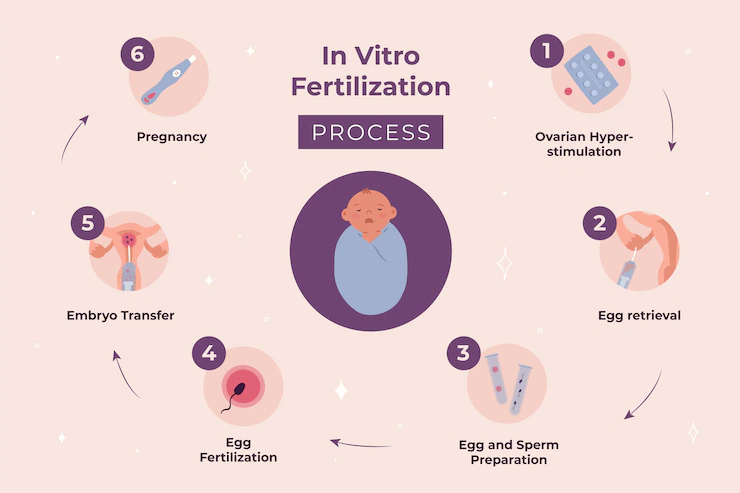
In vitro fertilization or IVF is a method in which egg cells are fertilized with sperm under laboratory conditions, and one or more of the resulting egg cells, after passing several stages of cell division, become an "8-cell" or "5-day embryo". They are placed in the uterus so that the growth process of the fetus continues naturally.
In vitro fertilization (IVF) is a treatment for infertility or genetic problems. If IVF is being done to treat infertility, you and your partner may be able to try less invasive treatment options before IVF, including fertility drugs to increase egg production or intrauterine insemination - a procedure in which sperm are placed directly near the uterus. Placed.
Sometimes, IVF is offered as a primary treatment for infertility in women over 40 years of age. IVF is also done if you have certain health conditions. For example, IVF may be an option if you or your partner have:
Women who do not have a functioning uterus or for whom pregnancy poses a serious health risk may choose IVF using someone else to carry the pregnancy (gestational carrier). In this case, the woman's eggs are fertilized with sperm, but the resulting embryos are placed in the uterus of the pregnant woman.
The first step in IVF is to take fertility drugs for several months to help your ovaries produce several mature eggs ready for fertilization. This process is called ovulation induction. You may have regular ultrasounds or blood tests to measure your hormone levels and track your egg production.
Once your ovaries have produced enough mature eggs, your doctor will remove the eggs from your body (this is called egg retrieval). Egg retrieval is a minor surgical procedure performed in a doctor's office or at a fertility clinic.
You will receive medicine to help you stay calm and comfortable during the procedure. Using ultrasound to see the inside of your body, the doctor inserts a thin, hollow tube through your vagina into the ovary and the follicles that hold the egg. The needle is attached to a suction device that gently pulls the eggs from each follicle.
In the lab, your eggs are mixed with your partner's or donor's sperm cells, which is called insemination. Egg and sperm are stored together in a special container and fertilization occurs. For sperm that are less motile (also don't swim), they may be injected directly into the eggs to promote fertilization. As the cells from the fertilized eggs divide and develop into embryos, people working in the lab monitor the progress.
About 3-5 days after egg retrieval, 1 or more embryos are placed in your uterus (this is called embryo transfer). The doctor will insert a thin tube into the uterus through the cervix and insert the embryo directly through the tube into the uterus.
Pregnancy occurs when each embryo attaches to the lining of your uterus. Embryo transfer is done in a doctor's office or at a fertility clinic and is usually painless.
Plan to rest the rest of the day after the embryo transfer. You can return to your normal activities the next day. You may also take the pill or inject a hormone called progesterone daily for the first 8 to 10 weeks after the embryo transfer. Hormones make it easier for the fetus to survive in your womb.
Like all medications and medical procedures, IVF has some risks and possible side effects. This includes:
Your doctor can discuss any questions or concerns about the risks and side effects of IVF with you.
IVF can also be emotionally difficult, both for the person undergoing the procedure and for their partner and/or family. Many people undergoing IVF treatments struggle with depression and anxiety during the process.
Talking to people who have been through fertility and IVF problems can be really helpful if you're feeling down or hopeless. Online and in-person forums are also great places to meet people who understand what you're going through and can offer advice and support. Counselors and therapists can also be a source of comfort.
ART treatment processes are performed with full observance of the principle of confidentiality and confidentiality and after going through the legal process.