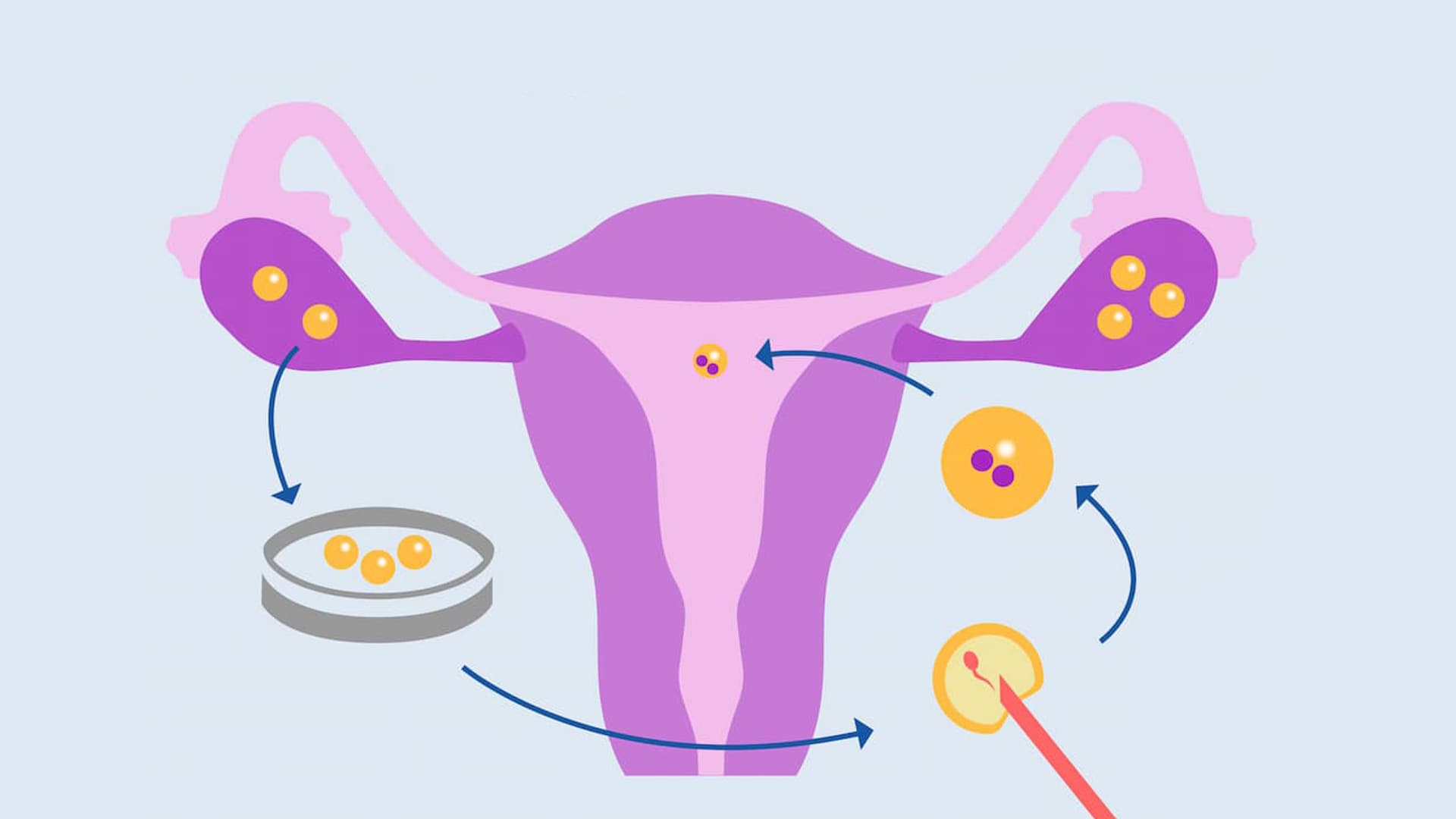
Intracytoplasmic injection of sperm or microinjection is one of the effective methods of in vitro fertilization in the treatment of infertile couples. In this method, in the laboratory environment, high-quality and fertile sperm are injected directly into the cytoplasm of the egg with special tools.
Before the male sperm can fertilize the female egg, the sperm head must attach to the outside of the egg. After attachment, the sperm pushes through the outer layer into the egg (cytoplasm), where fertilization takes place.
Sometimes sperm cannot penetrate the outer layer for various reasons. The outer layer of the egg may be thick or hard to penetrate, or the sperm may not be able to swim. In these cases, a procedure called intracytoplasmic sperm injection (ICSI) is performed along with in vitro fertilization (IVF) to help fertilize the egg. During ICSI, a sperm is injected directly into the cytoplasm of the egg.
There are two methods of egg fertilization by IVF: traditional and ICSI. In traditional IVF, 50,000 or more swimming sperm are placed next to the egg in a laboratory dish. Fertilization occurs when one of the sperm enters the cytoplasm of the egg. In the ICSI process, a small needle called a micropipette is used to inject a sperm into the center of the egg. With traditional IVF or ICSI, after fertilization occurs, the fertilized egg (now called an embryo) is grown in the laboratory for 1 to 5 days before being transferred to the woman's uterus (womb).
ICSI helps overcome fertility problems, such as:
ICSI fertilizes 50-80% of eggs. But the following problems may occur during or after the ICSI process:
Once fertilization occurs, a couple's chances of having a singleton, twins, or triplets are the same if they do IVF with or without ICSI.
If a woman conceives naturally, there is a 1.5 to 3 percent chance that the baby will have a birth defect. The chance of birth defects associated with ICSI is similar to IVF, but slightly higher than with natural pregnancy.
The slightly higher risk of birth defects may actually be due to infertility and not the treatments used to overcome infertility.
Some conditions are associated with the use of ICSI, such as Beckwith-Wiedmann syndrome, Angelmann syndrome, hypospadias, or sex chromosome abnormalities. They are thought to occur in less than 1% of children conceived using this method.
Some problems that cause infertility may be genetic. For example, male children conceived using ICSI may have the same infertility problems as their fathers.
Alternative treatment processes are performed with full observance of the principle of confidentiality and confidentiality and after going through the legal process.